

Project Area
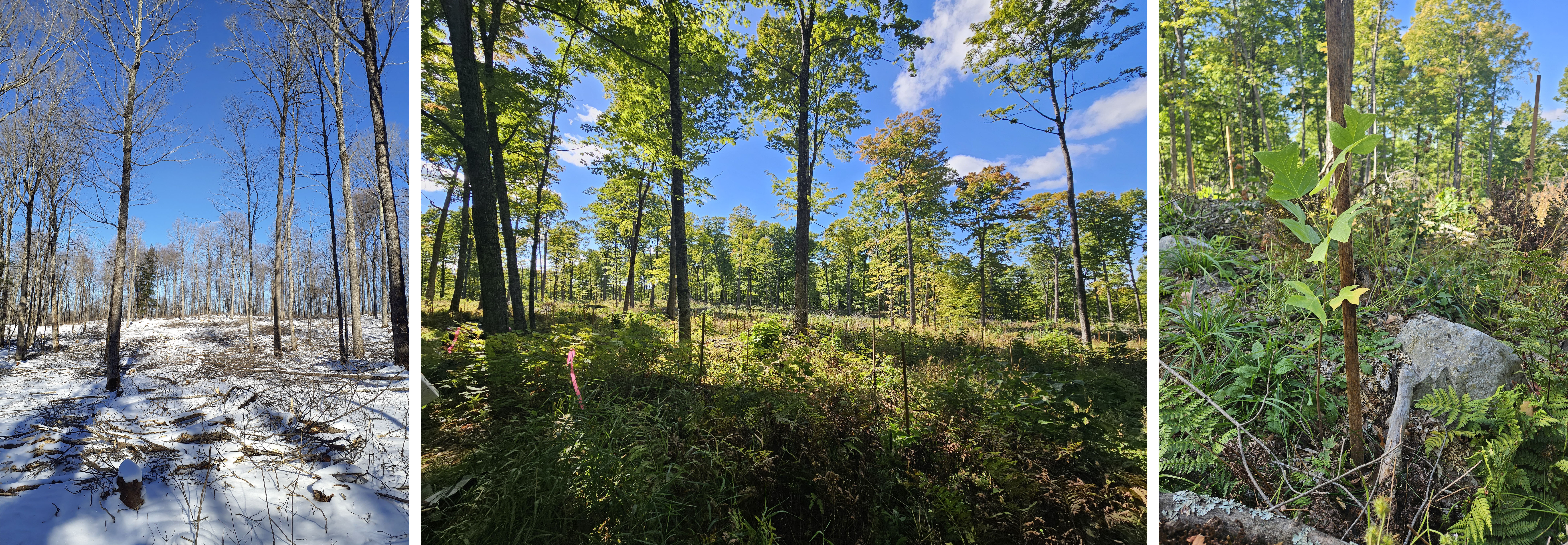
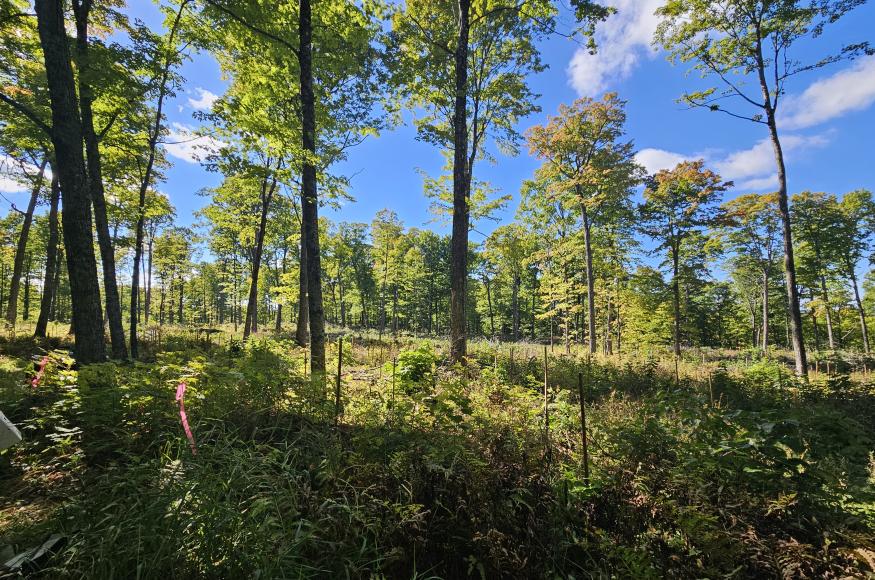
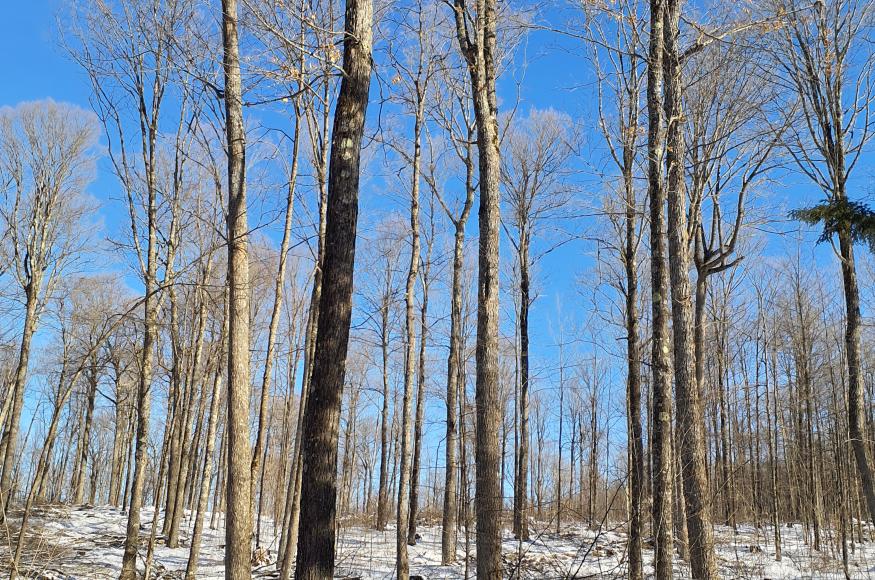
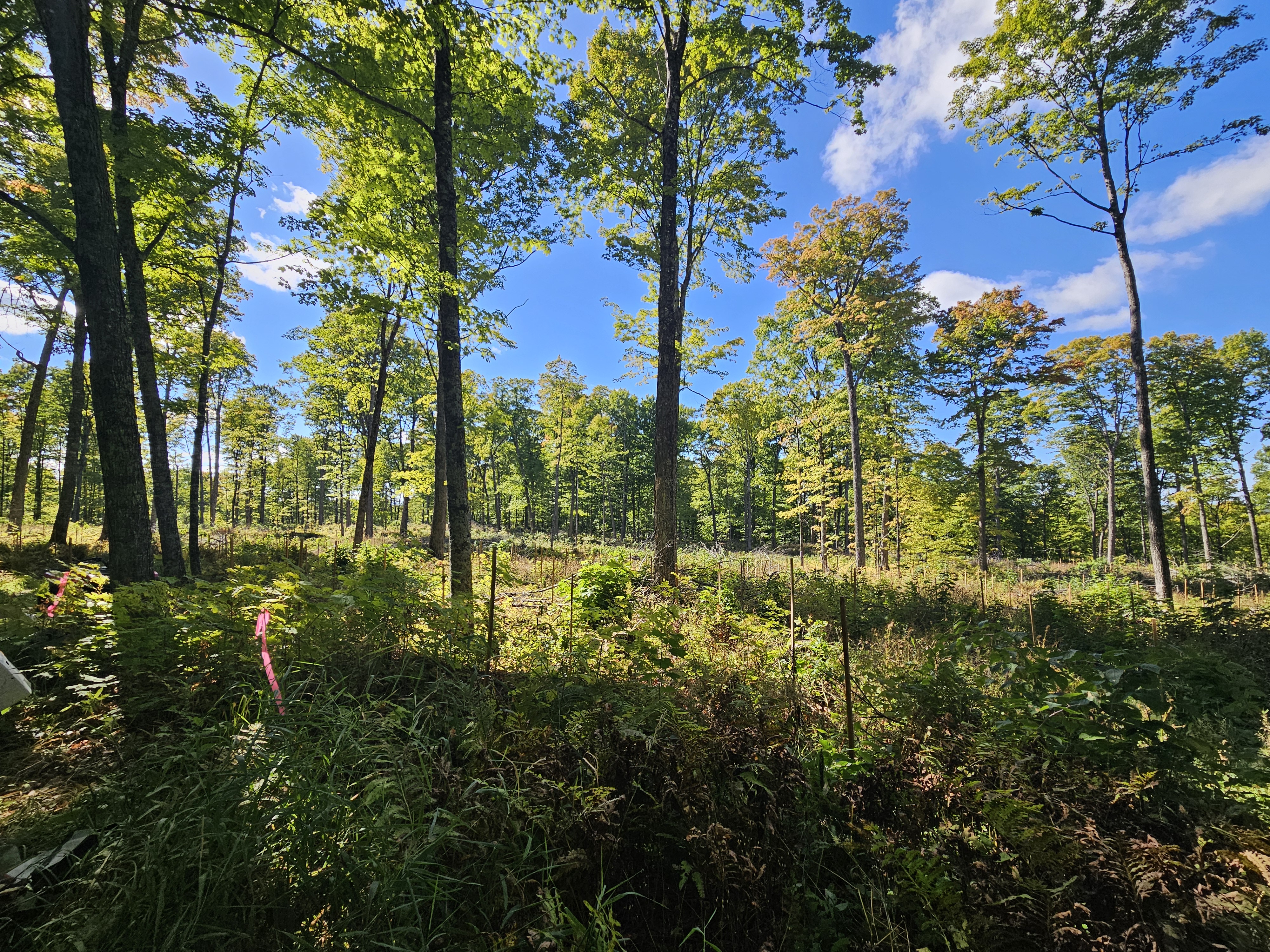
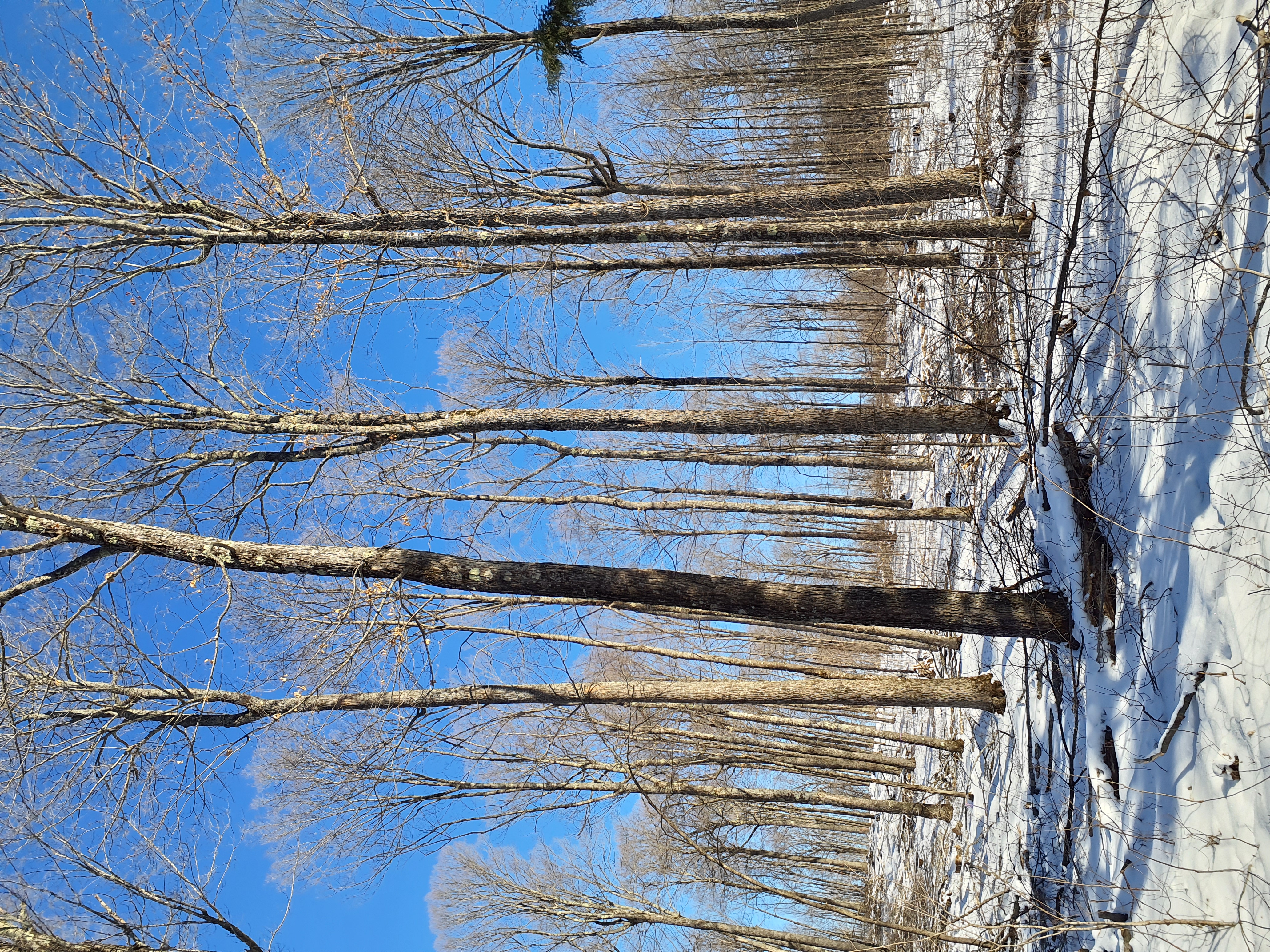
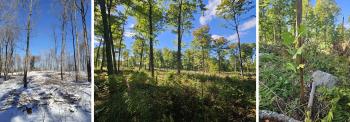 The Adaptive Capacity Through Silviculture (ACTS) experiment is located at the Michigan Technological University Ford Center and Forest (Ford Forest), a 3,700-acre experimental forest in Michigan’s Upper Peninsula. The study area is located on cobbly silt loams in the Champion series, which support productive upland northern hardwood forests. The project stand represents a mature northern hardwood forest with three distinct age classes and approximately 110 ft² of basal area per acre prior to treatment. The overstory is strongly dominated by sugar maple, with yellow birch comprising approximately 10% of the stand. Conifers occur primarily in lowland and wetland areas, while the upland portions of the stand are overwhelmingly hardwood-dominated.
Historically, the site has been managed using single-tree selection, with a target residual basal area of approximately 80 ft² per acre. The most recent harvest entry prior to establishment of the ACTS experiment occurred in 2013. Although this management system has maintained continuous forest cover and a multi-aged structure, repeated selection harvesting has contributed to a strong shift toward sugar maple dominance. This composition provides an important starting point for evaluating alternative adaptation approaches designed to increase adaptive capacity and the ability of forests to self-organize and continue to provide desired values and service in the face of changing conditions, including, but not limited to, climate change.
Management Goals
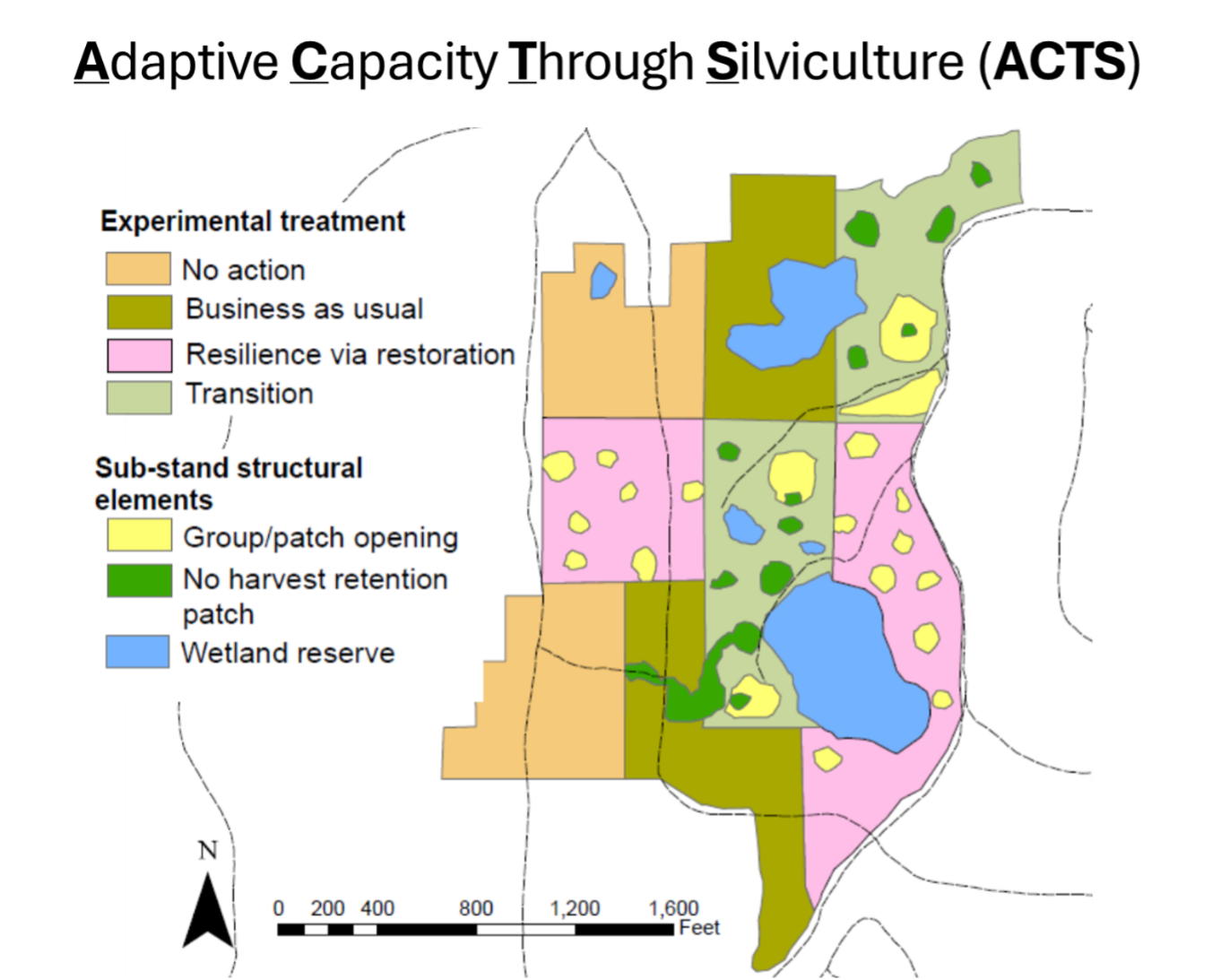

The objective of this experiment is to evaluate how alternative silvicultural strategies can influence the composition, structure, and associated ecosystem functions and services under a changing climate. Four management treatments—no action, business as usual, resilience, and transition—were established to represent a gradient of climate-change adaptation strategies. The treatment goals are:
Business as usual
- Represent “conventional” northern hardwood management in the region as a reference point for comparing adaptation strategies
- Maintain current composition and structure, dominated by sugar maple
- Encourage a balanced, uneven-aged structure and a continuous, multi-layered canopy
- Maintain current abundance of snags and downed dead wood
- Maintain or increase vigor and quality of residual trees while maintaining current productivity.
Resilience
- Maintain the core characteristics of the existing northern hardwood forest while increasing its capacity to withstand and recover from climate-related stress and disturbance.
- Increase tree species and functional diversity, with a component of species that are adapted to future climate conditions
- Create an uneven-aged stand with multiple age classes of trees
- Increase amounts of dead wood to retain moisture, buffer episodic precipitation, and provide microhabitat for plants and wildlife
Transition
- Intentionally shift forest composition toward a future condition expected to be better suited to projected climate conditions.
- Maintain or increase species diversity over time
- Increase abundance of tree species better able to tolerate future conditions
- Create an multi-aged stand with irregular vertical and horizontal structure
- Increase amounts of dead wood to retain moisture, buffer episodic precipitation, and provide microhabitat for plants and wildlife
Climate Change Impacts
For this project, the most important anticipated climate change impacts include:
Increases in summer temperatures and more frequent droughts could increase moisture stress in northern hardwood forests, especially in stands with high stocking levels.
Increases in extreme weather events may lead to more frequent or widespread windthrow, which could favor more shade-intolerant species.
More erratic snowfall and more frequent freeze-thaw events could damage surface roots and expose regeneration to more deer browse damage during the winter.
Deer populations will likely increase with warmer winters, which may limit regeneration of hardwood species.
Forest tent caterpillar and other pests may cause more damage in climate-stressed forests. New pests such as hemlock woolly adelgid and Asian longhorned beetle may be able to persist if introduced.
Increasing severity of earthworm invasion may inhibit natural regeneration of sugar maple in the future.
Climate change projections indicate that sugar maple will experience reduced suitable habitat across the western UP, which may present risks for stands such as the ACTS site that are heavily dominated by sugar maple.
Adaptation Actions
Project participants used the Adaptation Workbook to develop several adaptation actions for this project, including:
Area/Topic
Approach
Tactics
Business as Usual
Single-tree selection to 80ft2/acre reduces stand density and competition among residual trees while maintaining continuous forest cover.
Retaining existing snags maintains biological legacies that provide habitat and contribute to structural complexity and ecological function.
Resilience
5.1. Promote diverse age classes.
5.2. Maintain and restore diversity of native species.
5.3. Retain biological legacies.
9.1. Favor or restore native species that are expected to be adapted to future conditions.
9.2. Establish or encourage new mixes of native species.
9.4. Protect future-adapted seedlings and saplings.
5.2. Maintain and restore diversity of native species.
5.3. Retain biological legacies.
9.1. Favor or restore native species that are expected to be adapted to future conditions.
9.2. Establish or encourage new mixes of native species.
9.4. Protect future-adapted seedlings and saplings.
Mixed group and single-tree selection - Group openings of 0.1 and 0.25 acres over 10% of the stand create opportunities for establishment & development of new cohorts, increasing age-class diversity & structural heterogeneity.
Retain trees across all diameter classes; no maximum diameter - maintains structural and age diversity, preserves a broader representation of native species, and retains existing trees as biological legacies.
Retain and promote underrepresented species, such as hemlock, cedar, pine, yellow birch, basswood, and black cherry, to increase compositional diversity and, where appropriate, to perform well under future climate conditions.
Enrichment planting of e. white pine, e. hemlock, yellow birch, paper birch, sugar maple, & Am. basswood increases the representation of native species expected to contribute to future forest resilience. Tree tubes/browse protection improve survival.
Transition
1.4. Reduce competition for moisture, nutrients, and light.
5.1. Promote diverse age classes.
5.2. Maintain and restore diversity of native species.
5.4. Establish reserves to maintain ecosystem diversity.
8.2. Favor existing genotypes that are better adapted to future conditions.
9.2. Establish or encourage new mixes of native species.
9.3. Guide changes in species composition at early stages of stand development.
9.4. Protect future-adapted seedlings and saplings.
5.1. Promote diverse age classes.
5.2. Maintain and restore diversity of native species.
5.4. Establish reserves to maintain ecosystem diversity.
8.2. Favor existing genotypes that are better adapted to future conditions.
9.2. Establish or encourage new mixes of native species.
9.3. Guide changes in species composition at early stages of stand development.
9.4. Protect future-adapted seedlings and saplings.
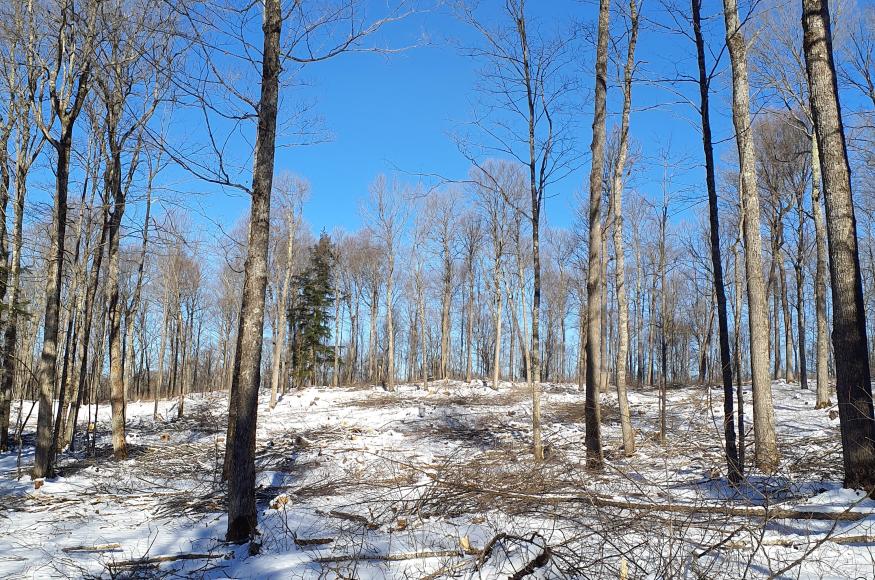
Expanding-gap shelterwood - Larger regeneration openings of 1 ac. combined with a partially retained shelterwood matrix thinned to 60 ft2/acre create a heterogeneous age and structural pattern and opportunities to establish a more diverse future forest.
Retain 10% of the treatment area in retention patches in order to maintain areas of existing forest within the regenerating treatment and provide refugia, structural complexity, and sources of biological legacies as the stand transitions.
Retain and promote underrepresented species - favoring underrepresented species such as e. white pine, e. hemlock, yellow birch, paper birch, & Am. basswood increases native species diversity & provides a broader pool of species for for future forest.
Clean planting area of advance regeneration of saplings - Mowing reduces competition around desired regeneration while selectively influencing which species establish and develop during the early stages of stand development.
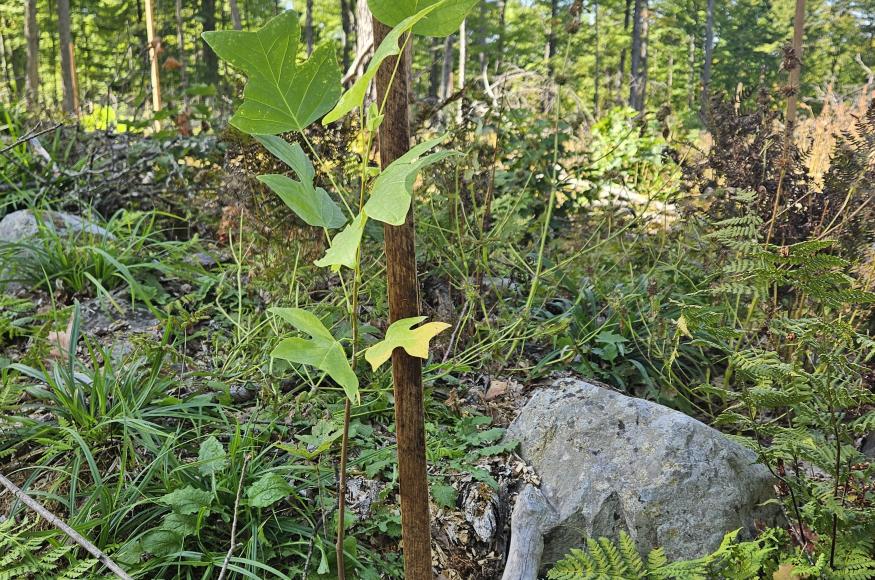
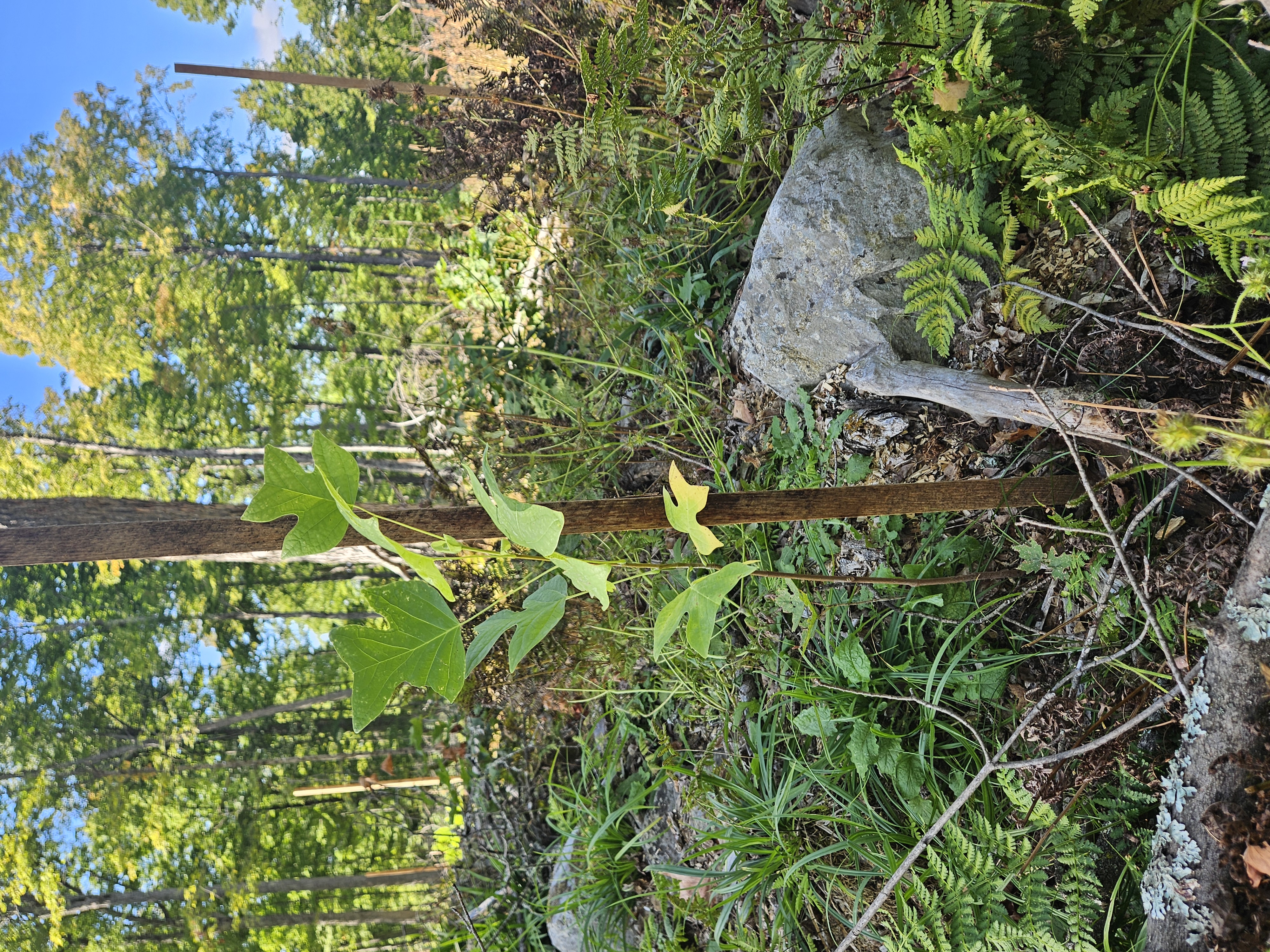
Assisted-migration plantings with browse protection - the mix included e. white pine (25%), n. red oak (25%), black cherry (10%), white oak (15%), bitternut hickory (5%), shagbark hickory (5%), shellbark hickory (5%), & tulip poplar (10%). Total ~680 TPA.
Plantings from different seed zones - Using eastern white pine and northern red oak seedlings from multiple seed zones tests whether genetic sources from warmer climates can improve establishment, growth, and adaptation under projected future conditions.
Monitoring
Researchers at Michigan Technological University are monitoring plant community and ecosystem responses using a 40 x 40 meter grid of nested overstory, understory and ground-layer subplots. Additionally, three 16 × 16 ft deer exclosures were established within each treatment unit to quantify the effects of deer browse on natural regeneration and planted seedlings. These exclosures will serve primarily as a research and monitoring tool rather than as a stand-level adaptation action. Within and outside the exclosures, seedling establishment and growth, and the ground-layer plant community will be evaluated to determine how deer browsing influences regeneration success.
For planted seedlings, growth rates will be measured repeatedly across patch cuts and shelterwood treatments, with comparisons among species, seed source, and planting location (patch versus shelterwood). These measurements will assess how species and genetic source interact with growing environment, providing insight into which planting strategies are most effective for establishing future-adapted forests.
For planted seedlings, growth rates will be measured repeatedly across patch cuts and shelterwood treatments, with comparisons among species, seed source, and planting location (patch versus shelterwood). These measurements will assess how species and genetic source interact with growing environment, providing insight into which planting strategies are most effective for establishing future-adapted forests.
Learn More
Keywords
Assisted migration
Research
Upland hardwoods